Choosing the right web hosting provider might not feel like the most exciting part of running a small business — but it’s one of the most important decisions you’ll make. Your hosting directly affects how fast your website loads, how reliable it is, and how professional your business appears online.
A slow or unreliable website can quietly push potential customers away, hurt your search rankings, and reduce trust in your brand. That’s why choosing the best web hosting for small businesses is about much more than just price — it’s about stability, performance, and long-term growth.
In this guide, we’ll break down exactly what small businesses should look for in web hosting, which options make the most sense in 2026, and why some providers stand out more than others.
What Web Hosting Means for Small Businesses
Web hosting is the service that stores your website’s files and delivers them to visitors whenever someone types your domain name into a browser. Without hosting, your website simply can’t exist online.
For small businesses, hosting doesn’t need to be complicated or overly powerful. What matters most is finding a solution that is reliable, easy to manage, and capable of growing as your business grows.
The best web hosting for small businesses focuses on:
- Consistent uptime and fast loading speeds
- Simple setup with minimal technical effort
- Built-in security features
- Reasonable pricing that fits a small business budget
You don’t need enterprise-level infrastructure — you need stability and simplicity.
What to Look for in the Best Web Hosting for Small Businesses
Not all hosting providers are built the same. While many advertise flashy features, only a few truly deliver what small businesses need.
1. Performance and Speed
Fast websites create better user experiences and rank higher in search engines. Hosting providers that use modern servers, SSD storage, and optimized configurations make a noticeable difference.
2. Reliability and Uptime
If your website goes down, customers can’t reach you. A dependable hosting provider should offer strong uptime reliability so your site stays accessible around the clock.
3. Security Essentials
Basic security should be included, not sold as an upgrade. SSL certificates, malware protection, and automatic backups are now standard requirements for any serious website.
4. Ease of Use
Most small business owners don’t want to manage technical settings. A clean dashboard, one-click installations, and simple management tools save time and frustration.
5. Helpful Customer Support
When something goes wrong, fast and knowledgeable support makes all the difference. Quality hosting companies provide responsive help when you need it most.
Why Bluehost Is One of the Best Choices for Small Businesses
Among the many hosting providers available, Bluehost consistently stands out as a reliable and beginner-friendly option for small businesses.
One of its biggest advantages is simplicity. Bluehost makes it easy to launch a website even if you’ve never built one before. The setup process is straightforward, and the control panel is designed for non-technical users.
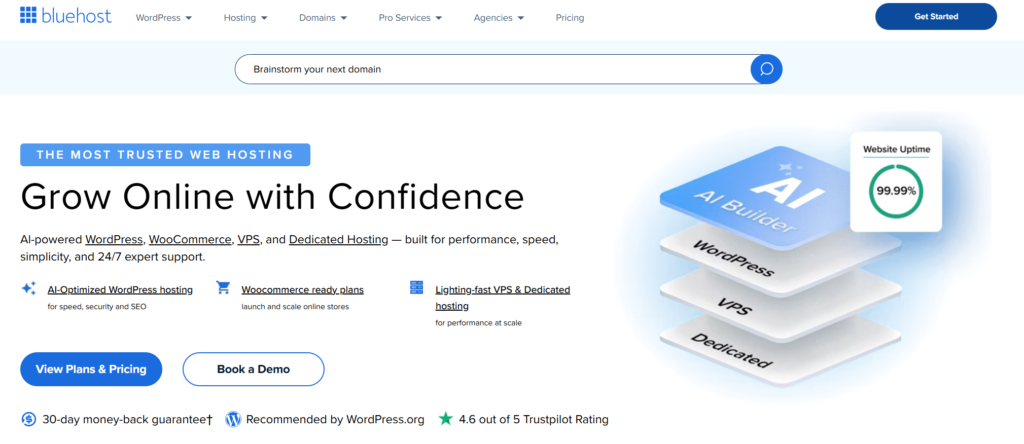
Bluehost is also officially recommended by WordPress, which makes it an excellent choice if you plan to build your site on WordPress. Installation takes just a few clicks, and updates are easy to manage.
In terms of performance, Bluehost offers stable uptime and dependable speed — exactly what small business websites need. You’re not paying for unnecessary enterprise features, but you still get a hosting environment that can grow with your business.
For many small business owners, Bluehost strikes the right balance between affordability, performance, and ease of use.
Other Hosting Options Worth Considering
While Bluehost is a strong all-around choice, it’s not the only option available.
Some small businesses prefer managed hosting providers like SiteGround, especially if they want more hands-on support and advanced performance optimization. These services are usually more expensive but can be helpful for users who want minimal technical involvement.
Cloud hosting is another option for businesses expecting rapid growth or traffic spikes. While flexible and scalable, cloud hosting typically requires more technical understanding and comes at a higher cost.
For most small businesses, starting with a reliable shared hosting plan and upgrading later is the most practical approach.
How Much Should Small Businesses Pay for Web Hosting?
Hosting costs vary depending on features and providers, but most small businesses can expect affordable monthly pricing, especially when starting.
Shared hosting plans are usually the most budget-friendly and work well for new websites. As your business grows, you can upgrade to higher plans without rebuilding your site from scratch.
When choosing a plan for the best web hosting for small businesses, don’t focus only on the promotional price. Look at renewal costs, included features, and long-term value. Paying slightly more for reliability and support is often worth it.
Final Thoughts
Choosing the best web hosting for small businesses doesn’t have to be complicated. The right hosting provider should support your growth, keep your website fast and secure, and allow you to focus on running your business instead of managing servers.
For most small businesses, Bluehost offers a well-balanced solution. It’s easy to use, dependable, and designed to grow alongside your business.
If your goal is to build a professional online presence without unnecessary technical stress, choosing the right hosting provider from the start can make all the difference.
Frequently Asked Questions
Is Bluehost good for small business websites?
Yes, Bluehost is a reliable choice for small businesses because it offers easy setup, stable performance, and beginner-friendly tools at an affordable price.
Do small businesses really need paid web hosting?
Yes. Paid hosting provides better speed, security, and uptime compared to free hosting, which often has limitations and ads.
Can I upgrade my hosting plan as my business grows?
Yes. Most hosting providers, including Bluehost, allow you to upgrade your plan anytime without rebuilding your website.
Is WordPress hosting better for small business websites?
Yes. WordPress hosting is optimized for performance, security, and ease of use, making it ideal for small business owners with limited technical skills.